0.050.09975 0

Launch of the activities of Québec économique 10: Compétences et transformation du marché du travail

Tuesday 15 Mar 2022
From 12PM To 2PM

The Québec économique 10: Compétences et transformation du marché du travail is now available!

This hybrid conference launched the activities related to the book.

Labour market imbalances have been present for a long time, but have been exacerbated by the Covid-19 pandemic. Matching the skills provided by workers with the needs of the labour market is increasingly important to Quebec's economic growth. That is why this 10th edition of Le Québec économique focuses on skills and the transformation of the labour market.

The various chapters of the book illustrate that the issues surrounding this theme are complex and sometimes marked by perceptions that don't always reflect the reality observed in the data. Thus, in this 10th edition of Québec économique, the authors attempt to shed new light on workforce and skills issues using concrete analyses based on evidence. The findings and recommendations of the 45 authors who contributed to the book will allow readers to better understand the challenges related to skills issues and the transformation of the labour market. 

During the various activities related to this 10th book, the authors of the book will discuss several key elements of this theme, such as the renewed strength of the labour market in times of pandemic and the issues related to telework. Some possible solutions to labour market imbalances will also be explored: the integration of immigrant workers and marginalized groups and the reorganization of work. In addition, the importance of initial training for individuals and the matching of skills to labour market needs will be discussed.

In this first event moderated by Genevieve Dufour, coordinator of the book, the panelists presented their respective chapters and discussed the skills and importance of education.
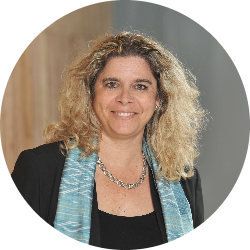
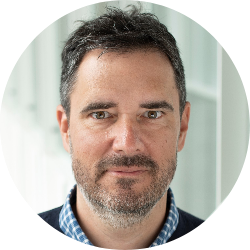
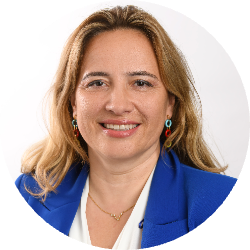
Nathalie De Marcellis-Warin

Nathalie de Marcellis-Warin joined CIRANO in 2000 as a postdoctoral researcher and was appointed President and CEO in 2016, after serving as Vice-President from 2008 to 2016. Since 2011, she has led the CIRANO Barometer project on risk perception in Quebec, which annually collects data on Quebecers’ concerns regarding 47 major societal issues. She is also Head of the CIRANO Research Pole on the Socioeconomic Impacts of Digital Intelligence and Principal Investigator of the Innovation and Digital Transformation research theme.

She is a Full Professor in the Department of Mathematics and Industrial Engineering at Polytechnique Montréal, where she also serves as Academic Director of PolyFinances. In addition, she is a Visiting Scientist at the Harvard T.H. Chan School of Public Health and an Associate Researcher at the Institute for Data Valorization (IVADO).

She holds a PhD in Management Science (specializing in risk management and insurance) from the École normale supérieure de Cachan. Her research focuses on risk management and decision-making in contexts of risk and uncertainty, as well as the design and evaluation of public policies. Her work combines economic analysis, cost-benefit analysis, survey data analysis, and more recently, large-scale unstructured data analytics.

In 2008, she founded the RISQH network, a knowledge-sharing and awareness network dedicated to risk management, patient safety, and quality of care in healthcare institutions. She contributed to the development of the Montreal Declaration for a Responsible Development of Artificial Intelligence.

She serves as Scientific Director of the Measurement Tools, Monitoring and Surveys Division at the International Observatory on the Societal Impacts of AI and Digital Technologies (OBVIA). She is also co-founder of the International Francophone Network on Scientific Advice (RFICS).

At CIRANO, she leads and contributes to several large-scale research initiatives, notably the creation of an economic digital twin of the St. Lawrence–Great Lakes region (GVCdtLab), developed in collaboration with the federal government.

She has published numerous scientific articles, several books, and more than 40 reports for government and other organizations. She has delivered over one hundred conferences and is regularly invited to speak in the media.

[ - ]
[ + ]

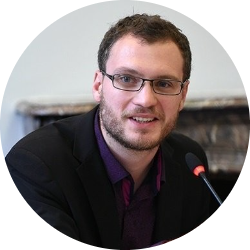
Benoit Dostie

A CIRANO Researcher and Fellow since 2001, responsible of the CIRANO Pole on the Socio-economic Impacts of Digital Intelligence and Main Researcher of the theme Skills, Benoit Dostie is Full Professor in the Department of Applied Economics at HEC Montréal.

He also holds the Power Corporation of Canada Chair in Labour Relations, Compensation and Benefits. Benoit Dostie is also Scientific Director of the Retirement and Savings Institute at HEC Montréal.

Holding a Ph.D. in Economics from Cornell University, his research interests are labour economics and applied econometrics.

[ - ]
[ + ]

Genevieve Dufour

Genevieve Dufour holds a Master's degree in Economics from the Université de Montréal, with a semester spent at Temple University in Philadelphia. She has worked as a research professional in numerous organizations including the Wharton School of the University of Pennsylvania, the Université de Montréal and CIRANO. She also has worked as a private economic consultant on assignments leading to the writing of expert reports used, among others, in Court.

Since her return at CIRANO in 2017, she has been in charge of numerous research partnerships, including those with the Ministère de l'Économie et de l'Innovation (MEI) on the socio-economic impacts of digital innovation and artificial intelligence, and the partnership with the Centre de recherches mathématiques CRM) on the importance of mathematics for Quebec society. In addition, she coordinated Le Québec économique 9: Perspectives et défis de la transformation numérique (2021) and Le Québec économique 10: Compétences et transformation du marché du travail (2022). She is also a member of  4POINT0 Scientific Committtee.

Her research interests focus mainly on the effects of technological innovations, labour market, training, human resources, and productivity.

[ - ]
[ + ]

Raquel Fonseca

A CIRANO Researcher and Fellow since 2012, Raquel Fonseca is Professor in the Department of Economics at the École des sciences de la gestion of the Université du Québec à Montréal. She is also co-holder of the Research Chair in Intergenerational Economics (CREEi), researcher and laboratory director at Centre de recherche de l’Institut universitaire de gériatrie de Montréal (CRIUGM), researcher at Centre de recherche sur les risques, les enjeux économiques, et les politiques publiques (CRREP) and Affilated Adjunct Economist at RAND Corporation.

Holding a Ph.D. in Economics from the University of Louvain, her research interests are health economics, pension systems, retirement and aging, poverty, entrepreneurship and labor markets.

[ - ]
[ + ]

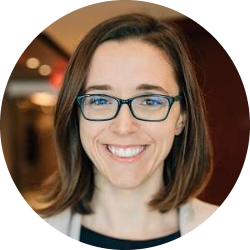
Catherine Haeck

A CIRANO Researcher and Fellow since 2011, Main Researcher of the theme Skills, Catherine Haeck is Full Professor in the Department of Economics at the École des sciences de la gestion of the Université du Québec à Montréal. She is also director of the CIQSS-UQAM-INRS Laboratory, a visiting researcher at the Quebec Inter-University Centre for Social Statistics (QICSS), a member of the Human Capital Research Group, a member of the Research Unit on Children's Psychosocial Maladjustment and researcher affiliated with the Education Policy Research Initiative.

Holding a Ph.D. in Economics from the Katholieke Universiteit Leuven, her research focuses on the human capital development of children and youth. She has written about universal childcare, prenatal nutrition programs, parental leave reforms, and school reforms. Her current research focuses on the impact of class size reduction on student outcomes, and also the impacts of universal childcare on household expenditures. She also studies the geographical and temporal evolution of intergenerational mobility in Canada compared to the United States with an aim to better understand the causal relationship between education and mobility.

She has published in several major economic and human capital journals, in addition to having received more than $9M in research grants since 2014 (including SSHRC and FRQSC).

[ - ]
[ + ]

Julien Navaux

Researcher and coordinator of the Research Chair on Intergenerational Economic Issues, HEC Montréal & ESG UQÀM

[ - ]
[ + ]

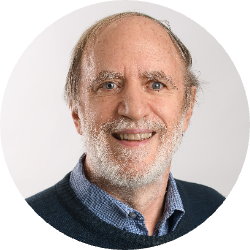
François Vaillancourt

A CIRANO Researcher and Fellow since 2004, François Vaillancourt is Emeritus Professor in the Department of Economics at the Université de Montréal.

Holder of a PhD in economics from Queen's University (1978), he published over 300 texts, particularly on intergovernmental financial relations, the complexity and impact of Canadian taxation, the cost-effectiveness of linguistic studies and attributes, and the economics of language policies.

Named a Fellow of the Royal Society of Canada in 2009, he received an honorary doctorate from the University of Geneva in 2021 for his work on the economics of language issues. Over his career, he has been a Fulbright Canadian Research Scholar in Kennesaw (2007) and a Shastri Lecturer in India (1993). He has been a visiting professor/researcher at the Andrew Young School of Policy Studies in Atlanta (2007 and 2009), FUCaM (Mons, Belgium, 2006), École Normale Supérieure de Cachan (Paris, 2006 and 2008), the University of Toronto (1991) and the Australian National University (1991). He was also research coordinator for the MacDonald Commission (1983-1986) and associate editor of Canadian Public Policy-Analyse de Politiques (1986-1995). He has acted as a consultant for various national (including CIDA, House of Commons Standing Committee on Finance, Commission Séguin, Law Reform Commission of Canada, Conseil de la Fédération, Conseil de la langue française du Québec, CSST, Finance Canada, Forum of Federations, Federal Expert Panel on Equalization Reform, Institut Fraser, Office de la langue française, Statistics Canada and the Auditor General of Canada and Quebec) and international organizations (AFD, World Bank, IMF, OECD, UNDP). He has worked in 35 countries/entities on issues of regional and local financial resources (taxation, transfers) and provided training in this field for the African Tax Institute, the Andrew Young School of Policy Studies, the World Bank, the IMF, and the Hague Academy for Local Governance.

[ - ]
[ + ]